
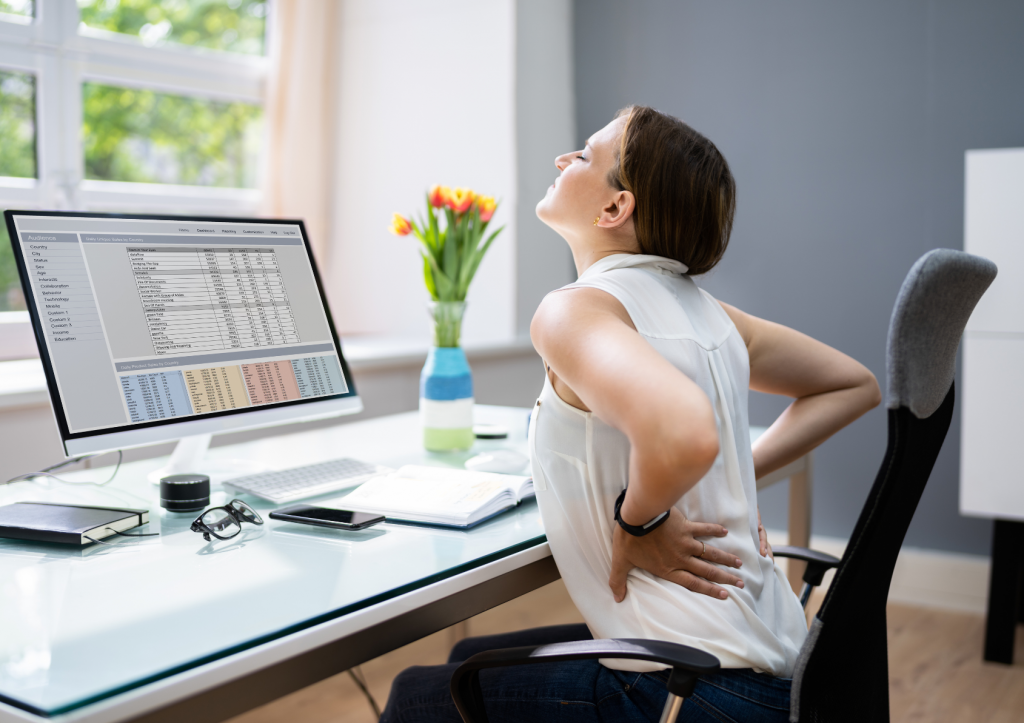
Desk jobs and poor circulation are directly connected through prolonged, uninterrupted sitting, which slows blood flow throughout the body, particularly in the legs and lower body. When muscles remain inactive for hours, they stop contracting, and without that muscular pumping action, blood and fluid pool in the lower extremities. The sections below unpack exactly how this happens, what it feels like, and what you can do about it.
How does prolonged sitting affect blood flow?
Prolonged sitting reduces circulation by removing the primary mechanism your body uses to return blood from the legs to the heart: muscular contraction. When leg muscles are active, they squeeze surrounding veins and push blood upward. When you sit still for hours, that pumping action stops almost entirely, and blood begins to pool in the lower legs and feet.
Beyond the legs, extended sitting compresses the back of the thighs against a chair seat, which physically narrows blood vessels and further restricts flow. Arteries that supply blood to the lower body also experience reduced demand and begin to deliver less oxygen-rich blood to inactive tissues. Over time, this reduced arterial activity can affect vascular flexibility, meaning the blood vessels themselves become less efficient at regulating flow.
Metabolism is also affected. Sitting for long periods suppresses the activity of enzymes responsible for breaking down fats in the bloodstream. When fat particles accumulate in the blood without being cleared, they can contribute to arterial buildup that compounds circulation problems over the long term. This is why the effects of a desk job extend well beyond discomfort and into genuine cardiovascular risk.
What are the symptoms of poor circulation from sitting too long?
The most common symptoms of poor circulation from prolonged sitting include swelling of the legs and feet, a heavy or aching sensation in the calves, numbness or tingling in the lower limbs, and cold feet. These signs reflect blood and fluid pooling in the lower body when the muscular pump of the legs is inactive for extended periods.
Many desk workers also notice that their feet feel stiff or puffy by the end of the day, particularly in warmer conditions or after long meetings. The swelling of the legs is caused by fluid leaking from sluggish veins into surrounding tissue, a process called edema. While mild edema from sitting is common and usually reversible, persistent or severe swelling deserves medical attention.
Less obvious symptoms include fatigue, difficulty concentrating, and a general sense of physical sluggishness. These can occur because reduced circulation limits the oxygen supply reaching the brain and muscles. Some people also experience lower back pain, shoulder pain, and neck pain that, while primarily postural in origin, are worsened by reduced blood flow and muscle tension that accompany static sitting postures.
Why are desk workers at higher risk for circulation problems than other workers?
Desk workers face higher circulation risk than most other worker groups because their jobs combine two compounding factors: near-total physical inactivity during working hours and sustained seated posture that mechanically restricts blood flow. Workers in trades, healthcare, retail, or education are almost always on their feet, moving regularly, and engaging the muscular pump that keeps circulation active.
The duration of uninterrupted sitting is particularly significant. Many office and home office workers sit for six to nine hours a day with only brief breaks, and research in occupational health consistently identifies long, unbroken periods of sitting as more harmful to vascular health than the total number of hours spent sitting. A desk worker who sits for four uninterrupted hours does more circulatory damage than a worker who sits for the same total time but breaks it into shorter intervals.
Ergonomics also plays a role. Poor workstation setup encourages slouching, crossed legs, and compressed postures that further restrict blood flow in the hips and thighs. In a home office environment, where chairs and desks are often not purpose-built for ergonomic support, these postural problems tend to be more pronounced. The combination of poor ergonomics, sedentary behavior, and long working hours makes desk-based roles uniquely problematic from a circulatory standpoint.
What health conditions can poor circulation from desk work lead to?
Poor circulation from prolonged desk work can contribute to a range of health conditions, from relatively minor musculoskeletal complaints to serious cardiovascular events. The most well-documented risk is deep vein thrombosis (DVT), a condition where blood clots form in the deep veins of the legs due to stagnant blood flow. If a clot dislodges and travels to the lungs, it becomes a pulmonary embolism, which is life-threatening.
Chronic venous insufficiency is another condition linked to long-term desk work. When veins lose their ability to return blood efficiently, the result is persistent leg swelling, varicose veins, skin discoloration, and in advanced cases, leg ulcers. This condition develops gradually and is strongly associated with years of sedentary occupational behavior.
Beyond the veins, reduced circulation contributes to metabolic dysfunction. Impaired blood flow limits the delivery of insulin to muscle tissue, reducing glucose uptake and increasing the risk of type 2 diabetes. Cardiovascular disease risk also rises because persistently sluggish circulation is associated with higher blood pressure, reduced arterial elasticity, and elevated levels of circulating fats. Back pain, neck pain, and shoulder pain, while primarily musculoskeletal, are worsened by chronic muscle tension and reduced tissue oxygenation that accompany poor circulation in sedentary workers.
How can you improve circulation while working at a desk?
The most effective way to improve circulation while working at a desk is to interrupt prolonged sitting regularly with movement, even brief movement. Standing up, walking to a colleague’s desk, or performing simple calf raises every 30 to 60 minutes reactivates the muscular pump and restores normal blood flow to the lower body. Frequency of movement matters more than duration.
Beyond movement breaks, there are practical adjustments that help throughout the working day:
- Adjust your chair height so your feet rest flat on the floor, reducing compression of the thighs against the seat edge
- Avoid crossing your legs for extended periods, as this restricts blood flow through the hip and thigh
- Stay hydrated throughout the day, since dehydration thickens the blood and makes circulation less efficient
- Perform ankle circles and foot flexions while seated to engage the calf muscles without leaving your desk
- Use a footrest or an active standing board to encourage small, continuous movements that stimulate circulation
Products designed for active workstations can make a meaningful difference here. The Gymba® Board for active standing workstations, for example, is designed to be used while standing at a height-adjustable desk and encourages natural, walking-like movement patterns. Its built-in massage balls also stimulate the soles of the feet, which supports blood flow from the lower extremities. Similarly, the Gymba MassageBar allows for targeted foot massage that improves local circulation and reduces the swelling and tension that build up during long desk sessions.
Does standing at a desk actually improve circulation compared to sitting?
Standing at a desk does improve circulation compared to sitting, but only when combined with movement. Simply replacing sitting with static standing does not resolve the circulatory problems associated with desk work. Standing without moving can cause its own issues, including venous pooling in the legs, varicose veins, and lower limb fatigue, because the muscular pump still needs active contraction to function properly.
The key distinction is between static postures, whether sitting or standing, and dynamic postures that involve regular, small movements. Research in occupational health and ergonomics consistently shows that alternating between sitting and standing throughout the day, while incorporating movement in both positions, produces better circulatory outcomes than either posture alone.
Height-adjustable desks are most effective when paired with tools that encourage active movement while standing. An activation board that mimics walking motion, for instance, keeps the calf muscles engaged and prevents the venous pooling that static standing produces. From an ergonomics standpoint, the goal is not to eliminate sitting but to eliminate prolonged, unbroken stillness in any single posture. A working rhythm that shifts between seated work, active standing, and brief walking breaks provides the most consistent circulatory benefit across a full working day. You can explore the full range of ergonomic active workstation products designed to support this approach, including the Gymba® Laptop Stand for flexible working and additional accessories available through the Gymba online store for ergonomic solutions.
Ready to support your circulation at your desk?
If this article has helped you understand how your workstation setup may be affecting your health, the next step is a practical one. Browse the full range of Gymba® ergonomic products to find the tools that fit your working style — whether that is an active standing board, a massage accessory, or a flexible laptop stand. Small, consistent changes to how you move at your desk can have a real impact on your long-term circulatory health.