
The most effective exercises for reducing lower back pain in desk workers combine targeted stretching to release tight muscles with strengthening work to build the support structures around the spine. Simple moves like hip flexor stretches, glute bridges, and cat-cow mobilizations address the root causes of sitting-related back pain. The sections below cover which muscles are involved, which exercises help most, and how to build a sustainable routine.
Which muscles cause lower back pain in desk workers?
Lower back pain in desk workers is most commonly caused by a combination of tight hip flexors, weak glutes, and an underactive core. Prolonged sitting shortens the hip flexors at the front of the pelvis, which tilts the pelvis forward and compresses the lumbar spine. At the same time, the glutes and deep core muscles become underused and weak, leaving the lower back to absorb stress it was never designed to handle alone.
The hip flexors, particularly the iliopsoas, are among the biggest contributors. When you sit for hours, these muscles adaptively shorten. When you stand up, they pull the pelvis into an anterior tilt, increasing the curve in the lower back and creating a constant low-level strain on the lumbar vertebrae and surrounding soft tissue.
The gluteus maximus and gluteus medius are equally important. These muscles stabilize the pelvis during movement. When they are weak from a sedentary desk job, the lower back muscles compensate, leading to fatigue, tension, and eventually pain. Poor posture during long work sessions also places a sustained load on the erector spinae muscles along the spine, which leads to tightness and discomfort by the end of the day. Swelling of the legs and reduced circulation in the lower body are additional side effects of prolonged sitting that can contribute to overall discomfort in the lumbar region.
What stretches relieve lower back pain from sitting?
The most effective stretches for relieving lower back pain caused by sitting target the hip flexors, piriformis, and lumbar spine directly. A kneeling hip flexor stretch, a supine figure-four stretch for the piriformis, and a knees-to-chest stretch for the lumbar spine are the three most practical options for desk workers. Each can be done in a small space without equipment in under five minutes.
Hip flexor and piriformis stretches
For the hip flexor stretch, kneel on one knee with the other foot forward in a lunge position. Gently push the hips forward until you feel a stretch at the front of the hip on the kneeling side. Hold for 30 to 45 seconds per side. This directly counteracts the shortening that happens during prolonged sitting.
The figure-four stretch targets the piriformis, a small muscle deep in the glute that often becomes tight and contributes to sciatic-type pain that radiates from the lower back into the leg. Lie on your back, cross one ankle over the opposite knee, and gently pull both legs toward your chest. Hold for 30 seconds per side.
Lumbar mobilization stretches
The cat-cow stretch is a gentle spinal mobilization that moves the lumbar spine through flexion and extension, improving circulation and reducing stiffness. On all fours, alternate between arching your back upward (cat) and letting it sag toward the floor (cow). Do 10 slow repetitions. The child’s pose is another effective option, gently decompressing the lumbar spine by letting the lower back lengthen under the body’s own weight.
What strengthening exercises prevent lower back pain for office workers?
The most effective strengthening exercises for preventing lower back pain in office workers are glute bridges, bird dogs, and dead bugs. These movements target the glutes, deep core stabilizers, and multifidus muscles that support the lumbar spine. Strengthening these areas reduces the compensatory load placed on the lower back during both sitting and standing.
The glute bridge is one of the highest-return exercises for desk workers. Lying on your back with knees bent, drive your hips toward the ceiling by squeezing the glutes. This directly activates the muscles that become dormant during long periods of sitting. Aim for three sets of 12 to 15 repetitions.
The bird dog trains spinal stability without loading the spine under compression. From an all-fours position, extend one arm forward and the opposite leg back simultaneously, keeping the lower back flat. This activates the multifidus and deep core muscles that protect the lumbar vertebrae during everyday movement. The dead bug exercise works similarly, training the core to maintain a neutral spine while the arms and legs move independently.
For neck pain and shoulder pain that often accompany back pain in desk workers, exercises like wall angels and scapular retractions help correct the rounded-shoulder posture that develops from leaning toward a screen. A well-rounded routine addresses the full chain from the lower back through the thoracic spine and shoulders.
How often should desk workers exercise to reduce back pain?
Desk workers should aim to perform targeted back pain exercises at least three to four times per week, with brief movement breaks every 30 to 60 minutes throughout the workday. Consistency matters more than duration. A 10-minute routine done four times a week produces better results for back pain than a single long session on the weekend.
Movement breaks during the workday are particularly important because they interrupt the sustained static posture that drives most desk-related back pain. Standing up, walking briefly, or doing a few stretches every hour prevents the hip flexors from locking into a shortened position and keeps blood circulating through the lower body. This also helps counteract swelling of the legs, which is a common complaint among people with desk jobs.
For strengthening work, allow at least one rest day between sessions targeting the same muscle groups. Stretching and mobility work can be done daily without risk of overtraining, making them ideal for a morning or end-of-day routine.
Can standing desks and active workstation products reduce lower back pain?
Yes, standing desks and active workstation products can meaningfully reduce lower back pain when used correctly. The key is alternating between sitting and standing throughout the day rather than standing for the entire shift. Standing desks reduce cumulative spinal compression from prolonged sitting, while active workstation accessories encourage micro-movements that keep the muscles of the lower back, glutes, and legs engaged.
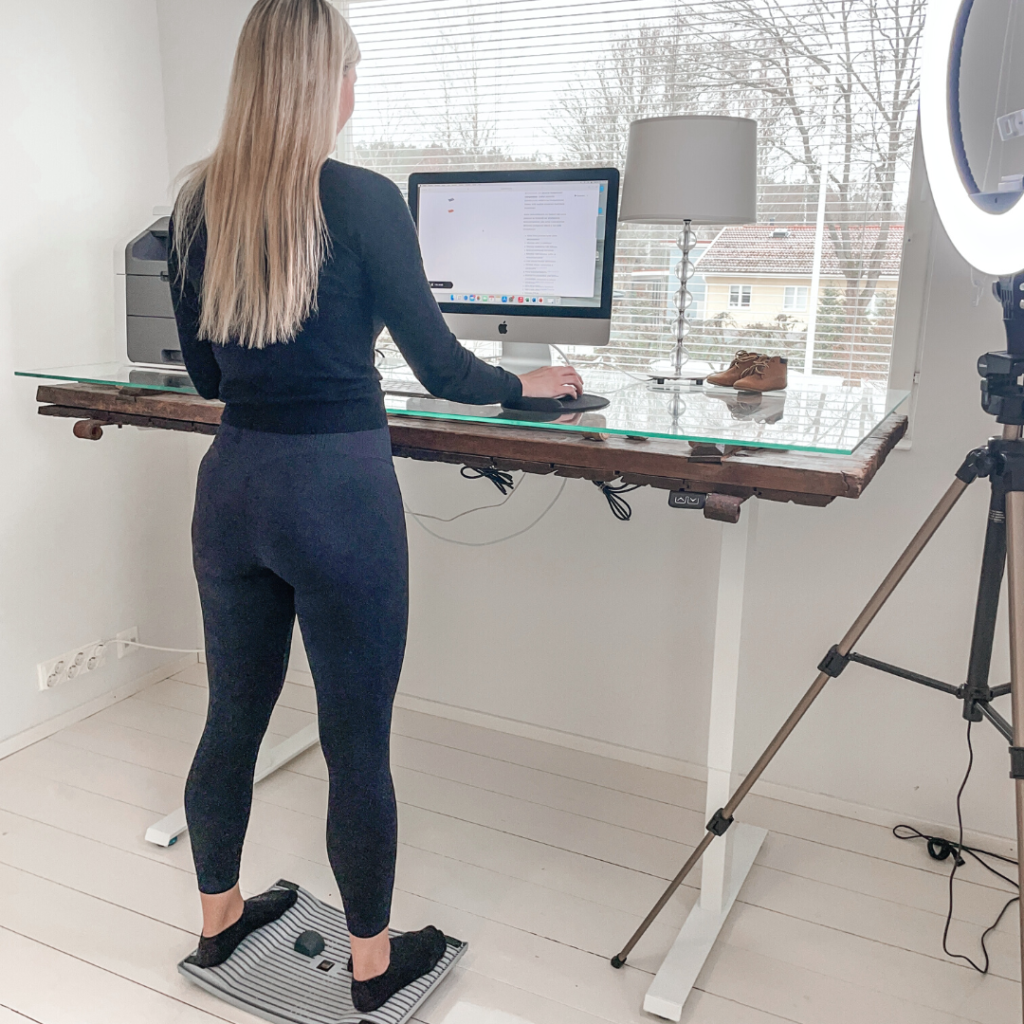
Simply switching from sitting to standing is not enough on its own. Static standing for long periods can create its own form of lower back strain. This is where active workstation products make a genuine difference. Products designed for dynamic standing, such as balance boards for active standing at desks, encourage the small postural adjustments that keep the core and lower body muscles working throughout the day.
Our Gymba Activation Board is designed specifically for this purpose. Its patented cross-spring mechanism allows movement that mimics natural walking while you work at a standing desk, reducing the static load on the lower back and improving circulation. Used alongside a height-adjustable desk, it supports a more ergonomic and active working posture. The Gymba Stretching Stick is another practical option for desk workers who want to add brief mobility work to their day without leaving their workspace, helping to open the chest and thoracic spine after periods of sitting.
When should a desk worker see a doctor about lower back pain?
A desk worker should see a doctor about lower back pain if the pain is severe, persists for more than two to three weeks despite rest and exercise, radiates down one or both legs, or is accompanied by numbness, tingling, or weakness in the legs. These symptoms can indicate a disc issue, nerve compression, or another condition that requires professional assessment rather than self-managed exercise.
Most desk-related back pain is mechanical in origin, meaning it stems from posture, muscle imbalances, and prolonged static positions. This type of pain typically responds well to the stretching and strengthening exercises described above, along with changes to workstation ergonomics. However, pain that wakes you from sleep, pain that follows an injury or fall, or any loss of bladder or bowel control should prompt immediate medical attention.
If you are unsure whether your lower back pain is mechanical or has another cause, a physiotherapist or general practitioner can assess your movement patterns, rule out structural causes, and guide you toward the most appropriate treatment. Starting with professional guidance also ensures that any exercise program you follow is safe and appropriate for your specific situation. You can also explore ergonomic products for desk workers designed to support a healthier working posture alongside any exercise routine. The Gymba Laptop Stand for better posture is one option that can help reduce neck and upper back strain during long work sessions.
Ready to support your lower back with the right ergonomic tools?
If the exercises and habits in this guide resonate with you, the next step is making sure your workstation supports the progress you are building. Gymba’s range of ergonomic products for desk workers is designed to work alongside an active routine — not replace it. Whether you are considering a balance board for dynamic standing or a stretching tool to use between tasks, exploring the options takes just a few minutes and could make a meaningful difference to how your back feels by the end of the working day.