
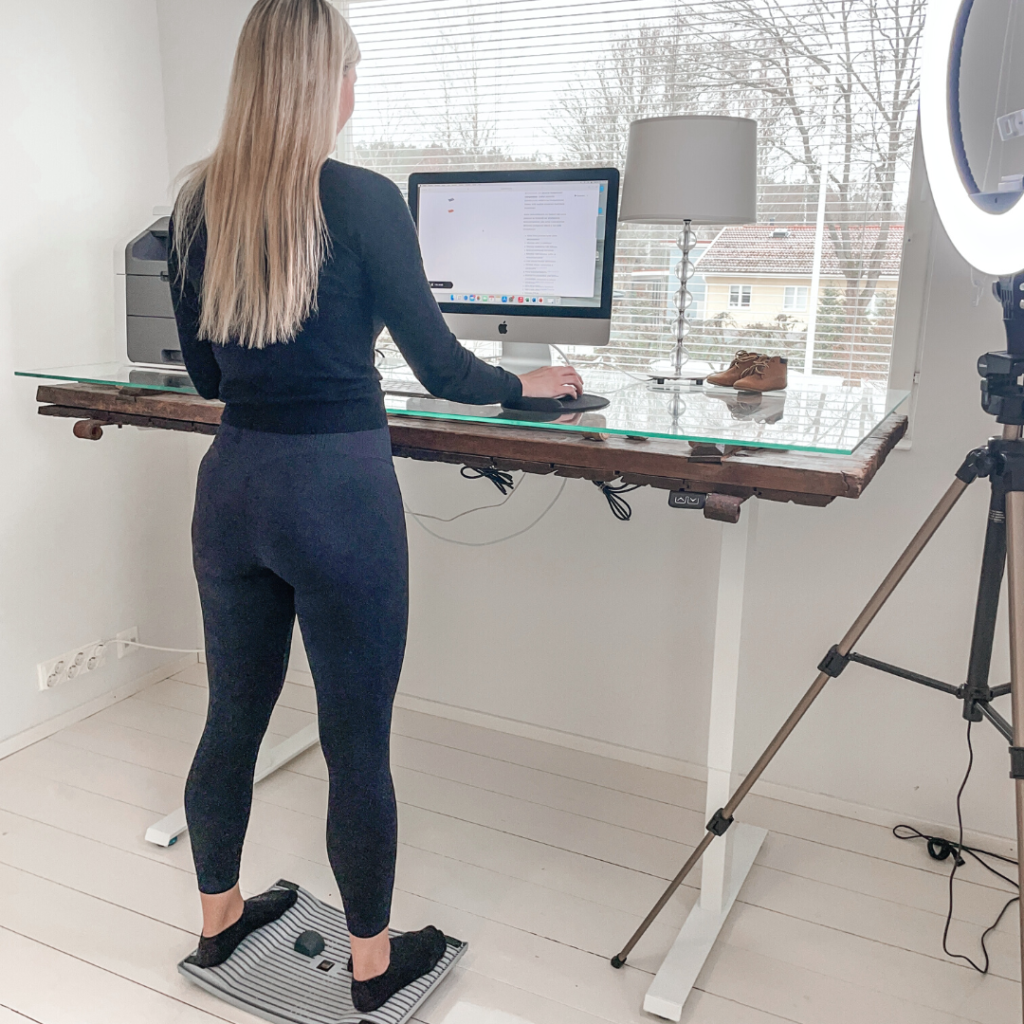
Sitting all day slows your metabolism in measurable, meaningful ways. When your muscles stay inactive for extended periods, your body reduces its calorie-burning activity, lowers the production of enzymes that break down fat, and shifts toward storing energy rather than using it. This effect compounds over time and is especially relevant for people with desk jobs, home office setups, or long commutes. The sections below address the most common questions about how prolonged sitting affects your body’s metabolic function.
What happens to your metabolism when you sit for hours?
When you sit for hours, your metabolism slows because your large muscle groups, particularly in your legs and core, become almost entirely inactive. Inactive muscles require far less energy, so your body’s calorie-burning rate drops significantly. At the same time, the enzyme lipoprotein lipase, which plays a key role in breaking down fat in the bloodstream, becomes less active.
This is not just about burning fewer calories. Prolonged sitting also affects how your body processes blood sugar. Without muscle contractions to help shuttle glucose into cells, blood sugar levels can remain elevated longer after meals. Over time, this pattern places strain on your metabolic system and can contribute to insulin resistance.
People who work desk jobs often notice additional physical effects alongside the metabolic slowdown. Lower back pain, neck pain, and shoulder pain are common consequences of static posture, as the spine and surrounding muscles are held in a fixed position for hours. Poor circulation from prolonged sitting can also lead to swelling of the legs, as blood and fluid pool in the lower extremities without the pumping action of moving muscles.
Does sitting all day cause weight gain?
Sitting all day does not directly cause weight gain on its own, but it creates the conditions that make weight gain more likely. The core mechanism is an energy imbalance: when your body burns fewer calories throughout the day because your muscles are inactive, any calorie surplus is more likely to be stored as fat rather than used as fuel.
The relationship between desk jobs and weight gain is also shaped by behavior. Long hours at a workstation often reduce the motivation or time for structured exercise. Fatigue from poor posture and back pain can further discourage physical activity after work. When a sedentary workday is combined with a sedentary evening, the cumulative effect on body composition becomes significant over months and years.
It is worth noting that weight gain from a desk job is not inevitable. People who deliberately incorporate movement throughout their day, whether through walking, standing, or active workstation tools for home and office, can offset much of the metabolic reduction caused by sitting.
How long does it take for sitting to affect your metabolism?
Metabolic changes from sitting can begin within 20 to 30 minutes of continuous inactivity. Research in exercise physiology consistently shows that lipoprotein lipase activity in the leg muscles drops noticeably after just a short period of sitting still. Blood sugar regulation also begins to shift within an hour of uninterrupted sitting following a meal.
These are short-term, reversible changes. Standing up or walking for even a few minutes can restore muscle activity and prompt the body to resume normal metabolic processing. The concern arises when these short-term effects stack up across an entire workday, five days a week, year after year. The cumulative metabolic impact of a consistently sedentary lifestyle is far greater than any single afternoon at a desk.
For people in home office environments, the risk of prolonged, uninterrupted sitting is often higher than in traditional offices, where incidental movement like walking to meetings or common areas provides natural breaks.
What’s the difference between sitting at a desk and other sedentary behaviors?
The key difference between sitting at a desk and other sedentary behaviors is posture, duration, and context. Desk work typically involves sustained static posture in a fixed position for hours at a time, often with the neck tilted forward and the shoulders rounded. This specific posture pattern places concentrated load on the cervical and lumbar spine, contributing to neck pain, shoulder pain, and chronic lower back pain in ways that casual sitting on a sofa does not replicate to the same degree.
Watching television, reading, or resting on a couch are also sedentary, but they tend to involve more postural variation. People shift position, recline, or move more naturally. Desk work, by contrast, is task-focused, which means the brain is engaged while the body is locked in place. This combination makes it particularly easy to remain completely still for extended periods without noticing.
Ergonomics matters here. Poor ergonomics at a workstation amplifies the physical damage of desk sitting, while a well-designed setup can reduce postural strain significantly. The metabolic effects of sitting are largely the same regardless of what you are doing, but the musculoskeletal consequences of desk work are shaped heavily by how your workstation is arranged. Exploring the full range of ergonomic products for desk workers can help identify the right tools for your setup.
Can standing or moving at your desk reverse the metabolic effects?
Yes, standing and moving at your desk can meaningfully reverse the metabolic effects of sitting, particularly when done consistently throughout the day. When you stand, your leg and core muscles re-engage, lipoprotein lipase activity increases, and your body returns to a more active metabolic state. Even light movement, such as shifting weight or small stepping motions, produces measurable improvements in blood flow and calorie usage compared to sitting still.
Dynamic standing, where you move while standing rather than simply swapping one static position for another, is especially effective. Tools designed for active workstations, such as the Gymba® Board for active standing, support this kind of movement by encouraging subtle, walking-like motions while you work. This approach activates the muscles in your feet and legs continuously, which improves circulation, reduces swelling of the legs, and keeps your metabolism more engaged than passive standing alone.
It is important to understand that standing is not a complete replacement for sitting. Alternating between sitting, standing, and light movement throughout the day is more effective than spending the entire day in any single position. The goal is variety and regular activation, not simply eliminating the chair.
How many movement breaks does it take to offset a sedentary workday?
Current guidance from exercise science suggests that breaking up sitting time every 30 minutes with at least two to five minutes of light movement is an effective strategy for reducing the metabolic and circulatory consequences of desk work. This means roughly 8 to 16 short breaks across a standard eight-hour workday. The breaks do not need to be intense. Standing up, walking to another room, or doing light stretching is sufficient to re-engage your muscles and reset your metabolic rate.
Frequency matters more than total duration when it comes to countering the effects of sitting. A single 30-minute walk at lunch does not fully offset six hours of uninterrupted sitting, because the metabolic suppression occurs continuously throughout the sedentary periods. Spreading movement across the day is more protective than concentrating it in one block.
For people experiencing back pain, shoulder pain, or tension from desk work, movement breaks also serve a musculoskeletal function. Brief stretching or mobility work during breaks helps relieve the postural compression that builds up in the spine and surrounding tissues over the course of a workday. The Gymba® Balance Board MINI for compact spaces is designed specifically for this kind of quick, in-office mobility work, making it easy to maintain movement without leaving your workspace. For those who also need screen height support, the Gymba® Laptop Stand for ergonomic posture helps reduce neck and shoulder strain as part of a well-arranged workstation.
The practical takeaway is that consistent, frequent movement throughout the day, supported by an ergonomic workstation setup, is the most effective way to protect your metabolism and your body from the cumulative effects of desk work.
Build a workstation that supports an active, healthier workday
If this article has helped you understand how your desk setup affects your metabolism and physical wellbeing, the next step is putting that knowledge into practice. Gymba® offers a range of ergonomic tools designed specifically for desk workers who want to move more, sit smarter, and feel better throughout the day. Browse the full range of ergonomic products to find the right combination for your workspace, whether you are working from a home office or a traditional desk environment.