
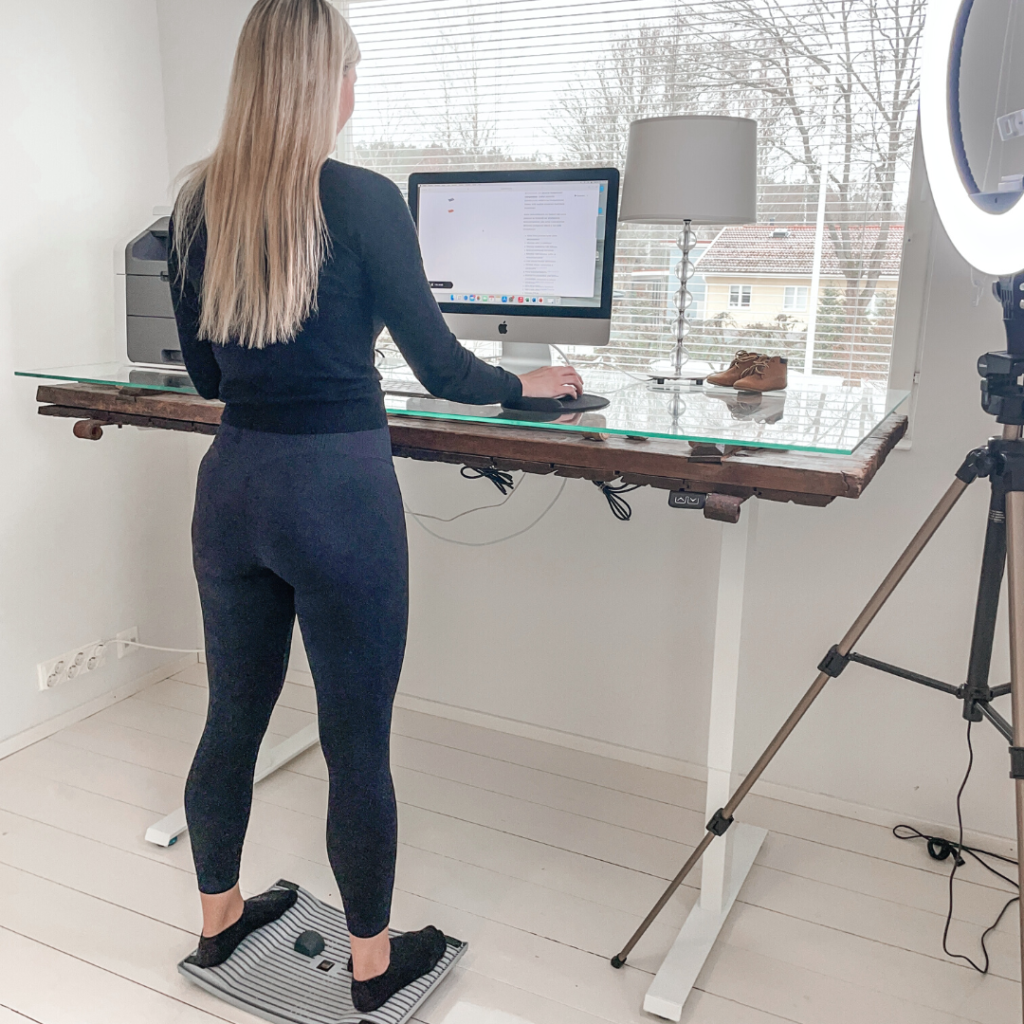
An ergonomic workstation improves metabolism and circulation by encouraging movement, reducing prolonged static postures, and supporting the body’s natural physical processes throughout the workday. When you alternate between sitting and standing, engage stabilizing muscles, and allow small movements at your desk, your body burns more energy, pumps blood more efficiently, and avoids the harmful effects of staying in one position for hours. The sections below answer the most common questions about how this works in practice.
What happens to your body when you sit for long hours at a desk?
Prolonged sitting slows your metabolism, reduces blood flow to the legs, and places sustained pressure on the spine. When you remain seated for several hours without movement, your muscles become inactive, calorie burning drops significantly, and circulation to the lower extremities slows. This is why so many people with a desk job experience swelling of the legs, fatigue, and stiffness by the end of the day.
The physical consequences extend beyond discomfort. Lower back pain is one of the most frequently reported complaints among office workers, driven by the compression that a seated posture places on the lumbar spine. Neck pain and shoulder pain follow closely, often caused by holding the head forward toward a screen for extended periods. Over time, these static postures weaken the muscles that support the spine, making the body more vulnerable to chronic musculoskeletal issues.
From a metabolic standpoint, long periods of inactivity reduce the body’s ability to regulate blood sugar and process fats effectively. This is not simply about burning fewer calories during the workday. It reflects a broader shift in how the body functions when large muscle groups, particularly in the legs and core, are kept idle for hours at a time. The good news is that even small, regular movements can begin to reverse these effects.
How does an active workstation boost metabolic rate?
An active workstation boosts metabolic rate by keeping muscles engaged throughout the day rather than allowing them to remain completely idle. When you stand, balance on an activation board, or make small weight shifts while working, your body continuously recruits stabilizing muscles in the legs, core, and back. This low-level muscular activity adds up across a full workday and meaningfully increases total energy expenditure compared to uninterrupted sitting.
The mechanism is straightforward. Muscles require energy to function, and even minor postural adjustments trigger metabolic activity. Standing alone burns more calories than sitting, but the real benefit of a well-designed active workstation comes from the movement it encourages. Products like the Gymba Activation Board are built specifically for this purpose. The patented cross-spring design allows users to shift their weight and move in a way that mimics walking, keeping muscles active without interrupting concentration or workflow.
For people working from a home office, this kind of metabolic stimulation is especially valuable. Without the incidental movement of commuting, walking between meetings, or moving through an office building, the body can become almost entirely sedentary during working hours. An active workstation reintroduces that physical engagement in a practical, low-effort way. You can explore ergonomic active workstation products online to find options suited to a home setup.
Why does standing and moving improve blood circulation?
Standing and moving improve blood circulation because muscular contractions act as a pump that pushes blood back toward the heart. When the leg muscles are engaged, they compress the veins and assist the cardiovascular system in moving blood upward against gravity. Sitting for long periods without movement removes this assistance, which is why blood pools in the lower legs and feet, causing the swelling of the legs that many desk workers notice by the afternoon.
This effect is well understood in the context of circulatory health. The veins in the legs rely heavily on surrounding muscle activity to maintain adequate flow. When that activity stops, venous return slows, and the heart must work harder to maintain adequate circulation throughout the body. Over time, poor circulation in the legs can contribute to discomfort, heaviness, and in more serious cases, an increased risk of vascular issues.
Movement also improves circulation in the upper body. Shifting posture, adjusting balance, and engaging the core all stimulate blood flow to the muscles of the back and shoulders. This is part of why people who stand and move at their desks often report less shoulder pain and neck pain compared to those who remain seated in a fixed position throughout the day. Improved circulation means better oxygen delivery to tissues, which supports both physical comfort and mental alertness.
What ergonomic workstation features support circulation and metabolism?
The ergonomic workstation features that most directly support circulation and metabolism are height adjustability, active standing surfaces, and tools that encourage postural variety. A fixed desk, even an ergonomically positioned one, does not address the core problem of prolonged static posture. The ability to change position throughout the day is the single most important feature for metabolic and circulatory health. A full range of ergonomic workstation tools and accessories can help address each of these needs.
Height-adjustable desk compatibility
A sit-stand desk creates the foundation for an active workstation by making it physically possible to alternate between postures. Without this adjustability, most other ergonomic accessories have limited impact. The desk should allow the monitor to remain at eye level in both positions to prevent the neck strain that comes from looking up or down at a screen.
Active standing surfaces
Standing on a flat, hard floor for long periods can be tiring and counterproductive. An active standing surface, such as an activation board with a dynamic base, encourages continuous small movements that engage the legs and core. The Gymba® Board active standing platform is fundamentally different from a standard anti-fatigue mat, which simply cushions the feet. An active surface keeps the body in motion, which sustains circulation and metabolic engagement rather than just reducing foot discomfort.
Screen positioning accessories
Correct screen height is essential for reducing neck pain and preventing the forward head posture that strains the cervical spine. The Gymba® Laptop Stand for screen positioning positions the screen at eye level and supports a neutral spine alignment, which in turn allows the postural muscles to work efficiently rather than compensating for a poor angle.
How often should you switch between sitting and standing at your desk?
A widely supported guideline is to alternate between sitting and standing roughly every 30 to 60 minutes. This frequency gives the body enough time to benefit from each position without accumulating the negative effects of staying in either one for too long. Standing continuously for several hours can be just as fatiguing as sitting, so the goal is variety and movement, not simply replacing one static posture with another.
In practical terms, a rhythm that works well for many people is sitting for 45 to 50 minutes, then standing and moving for 10 to 15 minutes. This does not need to be rigidly timed. Listening to your body is equally important. If you notice stiffness in your lower back, tension building in your shoulders, or your legs beginning to feel heavy, those are reliable signals that it is time to change position.
The transition itself matters too. When you stand up, taking a moment to stretch, shift your weight, or walk briefly to get water or a document reinforces the circulatory benefit. Using a tool like the Gymba® Balance Board MINI for desk movement during standing intervals activates the muscles and stimulates blood flow most effectively, rather than simply standing still at the desk.
Can an ergonomic workstation help with posture and concentration too?
Yes, an ergonomic workstation directly supports better posture and improved concentration, and these two benefits are closely connected to the metabolic and circulatory improvements described above. When the body is positioned correctly and blood is flowing well, the brain receives a better oxygen supply, which supports sustained focus and cognitive performance throughout the day.
Posture improves when the workstation is set up to allow the spine to maintain its natural curves without effort. This means the monitor is at eye level, the keyboard is at a height that keeps the wrists neutral, and the feet are supported. Poor posture is not simply a matter of habit. It often reflects a workstation that makes a neutral position difficult to maintain. When ergonomics are right, good posture becomes the path of least resistance rather than a constant effort.
Concentration benefits follow naturally. Back pain, neck pain, and physical discomfort are significant distractions that fragment attention and reduce the quality of focused work. Reducing these physical stressors allows cognitive resources to stay directed at the task at hand. Additionally, the mild physical stimulation of an active workstation, such as small balance adjustments or weight shifts, can help counteract the mental fatigue that builds during long sedentary work sessions. Movement and alertness are physiologically linked, and an active workstation takes advantage of that connection.
Ready to Build an Ergonomic Workstation That Works for You?
If the connection between movement, circulation, and daily wellbeing resonates with you, the next step is straightforward. Browse the range of ergonomic workstation tools and accessories from Gymba to find the combination that fits your workspace and working style. Whether you are setting up a home office or improving an existing desk setup, the right active standing surface, screen positioning tool, or balance board can make a meaningful difference to how your body feels by the end of the working day.